




Burning Unsold Stock Can Cost A Retailer Its Reputation
A luxury retailer’s 2018 annual report included one line that became a global story within days. The retailer was found to be burning unsold stock worth £28.6 million. And the…
One process. A better outcome for material that would otherwise go to waste.
Textiles, workwear, uniforms, and stock become unusable for very different reasons, depending on where they come from. A retailer’s excess stock isn’t the same problem as a council’s end-of-life uniforms, and a charity’s donated clothing isn’t the same problem as a corporate site clearing out old workwear.
Red Rose Recycling runs the same disciplined process across all of it: collect, sort, and route toward reuse, resale, or secure destruction, adapted to what each sector actually needs.
Textile waste is not a marginal problem. The UK sends over 300,000 tonnes of clothing to landfill or incineration every year, according to WRAP, and most of it still has wear left in it before it’s written off as waste.
Red Rose Recycling exists to pull material out of that cycle before it reaches landfill, prioritising reuse and resale over destruction whenever the material allows it, and giving every client reporting to show where their stock actually ended up rather than a vague assurance that it was “recycled.”
Sectors
Towels, linen and workwear reach the end of their working life eventually, and a laundry operation isn’t set up to be the one deciding what happens to them next.
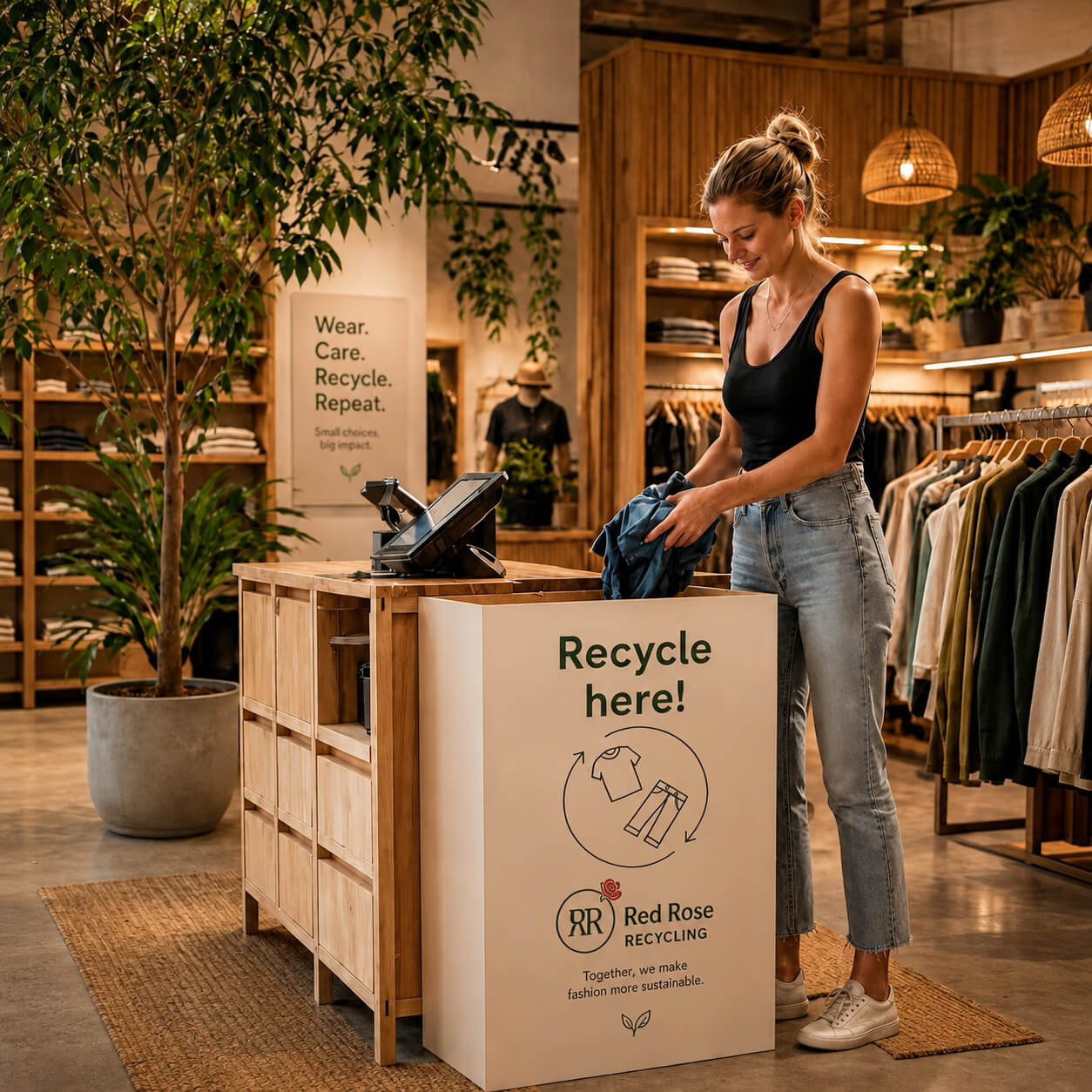
In-store take-back points and customer returns generate real volume, but a collection bin at the till is only the first step. What happens once it’s full is the part most retailers haven’t solved.
Excess production, cancelled lines, customer returns and deadstock sitting past its season all end up in the same place, taking up space with no clear route out.
A luxury retailer’s 2018 annual report included one line that became a global story within days. The retailer was found to be burning unsold stock worth £28.6 million. And the…
Every fashion retailer runs the same calendar. New season lands, old season needs to go, and whatever did not sell has to be cleared out fast enough to make room…
I’ve spent years in the cleaning and workwear side of this business before Red Rose Recycling existed, and the thing that finally pushed me to build this properly wasn’t a…
Start with whichever sector describes the majority of your material. A lot of organisations sit across two categories, a business with both corporate offices and a retail arm, for example. Get in touch directly, and we will tell you honestly whether one combined process covers it or whether it needs splitting.
The core process- collect, sort, route to reuse or destruction- stays the same. What changes is volume handling, reporting format, and material sensitivity. A council needs procurement-grade documentation. A charity mostly needs a reliable route for stock that will not sell in the shop.
Both. Some clients run a scheduled monthly collection, others come to us with a one-off job. Tell us what you have got and we will give you a straight answer on whether it makes sense for us to take on.
Secure, certified destruction, monitored throughout. This is the fallback option, used when reuse or resale genuinely is not viable, not the default outcome for material that is inconvenient to process properly.
Yes. Every collection comes with tonnage, reuse rate, and outcome data, structured to drop straight into ESG reporting or procurement records rather than needing reformatting on your end.